
Top 10 Innovative Culinary Arts Schools in Nigeria

Top 10 Innovative Culinary Arts Schools in Nigeria

Top 10 Innovative Culinary Arts Schools in Nigeria Nigeria’s food industry is growing at a faster rate than ever before. From high-end restaurants in Lagos and Abuja to catering businesses in smaller cities, the demand for skilled chefs, bakers, and food entrepreneurs continues to increase. It’s no surprise that food has always been at the heart of our culture, but now it’s also one of the fastest-rising career paths.   Of course, passion is a wonderful starting point. Many people love to cook for friends and family, but turning that passion into a successful career takes more than just good recipes. It requires proper training, exposure to modern techniques, and in many cases, certifications that are recognized beyond Nigeria’s borders. That’s why culinary schools across the country are raising the bar. They’re no longer just places to learn how to cook; they’re hubs of creativity, teaching innovation, food presentation, kitchen management, and even entrepreneurship. If you’re serious about building a career in food, choosing the right school could be the most important decision you make. In this blog, we’ll walk through 10 of the most innovative culinary arts schools in Nigeria. Each one has its own unique approach, but all are committed to equipping aspiring chefs, career changers, and students with the skills they need to succeed, both locally and internationally.   1. MPVT Culinary School, Lagos) As a leading vocational training institute, MOA Professional and Vocational Training has established itself as a top choice for aspiring chefs in Nigeria.  What sets MPVT apart is its status as a City & Guilds-accredited center, offering internationally recognized qualifications. With its headquarters in Egbeda, Lagos, MPVT provides a world-class culinary curriculum, blending extensive practical kitchen work with essential theoretical knowledge. This training is designed not only to meet but to exceed global standards, making graduates highly competitive in both the local and international job markets. Why choose a MPVT Culinary Training Program? Global Credibility: Earn a certificate recognized by employers worldwide, providing a significant advantage for securing jobs and placements abroad. Structured Excellence: Benefit from a comprehensive program that seamlessly integrates hands-on training with assessed theory, ensuring a well-rounded skillset. Clear Career Pathway: Gain a direct route to a professional career, whether you aim to work in Nigeria’s leading restaurants or pursue opportunities overseas. For those seeking a credible certificate and training that aligns with international standards, MOA Professional and Vocational Training is a strong and trusted option. 2. Red Dish Chronicles Culinary School (Abuja & Lagos) When people talk about modern culinary training in Nigeria, Red Dish Chronicles is usually one of the first names mentioned. They are known for blending African flavors with international cuisines. This school has built a reputation for creativity and innovation. Where can you study: Abuja and Lagos campuses. Courses available in Continental, Pastry, and African cuisines. Training is mostly hands-on, in professional-standard kitchens. Many of their graduates now run successful catering businesses or work in leading restaurants across Nigeria. 3. Culinary Academy (Lagos) Located in Victoria Island, the Culinary Academy is respected for producing chefs who are comfortable in both local and international kitchens. Where can you study: Victoria Island, Lagos. Accredited by City & Guilds, which means graduates receive an internationally recognized certificate. Offers opportunities for internships with top restaurants and hotels. Training takes place in modern kitchens designed to mirror real industry settings. Graduates from the Culinary Academy often find themselves well-prepared to work both in Nigeria and abroad.   4. Wavecrest College Of Hospitality (Lagos) Wavecrest is more than a culinary school, it’s a full hospitality management college. Their culinary program combines food preparation with hospitality training, so graduates can thrive in hotels, resorts, and even their own businesses. Where can you study: Located in Lagos. Accredited diplomas and professional courses. Combines culinary training with customer service and hospitality management. Strong reputation across Nigeria’s hospitality industry. Graduates often go on to become both chefs and leaders in hospitality. This is the place for anyone who wants to be both a chef and a future hospitality leader.   5. Chef Academy Nigeria (Abuja) Chef Academy takes a slightly different approach by blending theory with practice. They focus not only on how to prepare food but also on understanding the “why” behind techniques. Where can you study: Based in Abuja. Offers diplomas and flexible short courses. Includes modules on food presentation and plating. Entrepreneurship is part of the program, preparing students for business ownership. It’s a good option for those who want both culinary skills and a deeper understanding of the craft. 6. Havilah School of Culinary Arts and Hospitality Management (Lagos) Havilah has built its reputation on producing graduates who are ready to step into Nigeria’s hospitality industry immediately. Where can you study: Located in Lagos. Courses in African and Continental cuisines. Fully equipped kitchens for hands-on training. Strong focus on entrepreneurship and self-reliance. The school’s practical approach makes it ideal for students eager to start working quickly after training. 7. National Institute for Hospitality and Tourism (NIHOTOUR) NIHOTOUR is a government-run institute, which makes it quite different from most private culinary schools. It provides training in hospitality and tourism, with culinary arts as a central part of its programs. Where can you study: Training centers across Nigeria. Government-accredited diplomas and certifications. More affordable than many private institutions. It’s a solid choice for students seeking recognized qualifications at a lower cost. 8. Sense of Taste Specialty Caterers & Culinary School (Lagos) This school doubles as a catering company, which means students get to learn in a very practical, real-world environment. Where can you study: Located in Lagos. Programs with a strong focus on catering and event management. Short, intensive courses for quick upskilling. Students gain real-life exposure through catering projects. It’s well-suited for those aiming to move quickly into catering or event-based businesses 9. Yetkem Institute of Catering and Hotel Management (Lagos) Yetkem is one of the oldest names in Nigeria’s culinary training scene. For decades, it has trained chefs and hospitality professionals who are now scattered across

Top 10 Innovative Culinary Arts Schools in Nigeria Read More »

5 High-Demand Vocational Jobs in the UK

5 High-Demand Vocational Jobs in the UK Let’s get straight to the point. Nigeria is bursting with talent, but the local job market is tough. You’re ambitious, you’re educated, but you’re tired of hearing “‘we’ll get back to you.” What if you looked beyond the usual path? Here’s the truth, today’s employers, both here and abroad, are looking for more than what’s written on your degree. They’re looking for what you can do. They want real-world, practical skills that can solve problems from day one. And this is where a huge opportunity opens up. While we have a wealth of talent here, countries like the UK are actively searching for skilled professionals in construction, healthcare, IT, and more. They have the jobs, and Nigerians have the ambition. The bridge between the two is world-class vocational training. This isn’t about starting over; it’s about adding a powerful, practical skill to the determination you already have. Let’s break down five vocational jobs that are calling your name in the UK right now and show you how a trusted qualification from City & Guilds can help you answer that call. In this blog, we’ll highlight five vocational jobs currently in high demand in the UK, explain why they matter 1. Healthcare Support Workers The UK’s healthcare system is constantly looking for skilled hands to support doctors and nurses. Healthcare support workers provide direct care to patients, helping with meals, mobility, personal care, and emotional support. Why it’s in demand: The NHS (National Health Service) is facing a staff shortage. An aging population means more care is needed. Hospitals and care homes require skilled, compassionate workers. FAQ: What Qualifications do I Need for a UK Healthcare Support Worker? Through programs like Health and Social Care qualifications, learners develop practical skills that prepare them for real healthcare settings. For Nigerians, this is more than a job, it’s a career path with strong international relevance. 2. Construction Trades (Plumbers, Electricians, Welders) Step onto any construction site in London, Manchester, or even smaller towns in the UK, and you’ll quickly see the shortage of qualified tradespeople. Plumbers, electricians, and welders are among the most sought-after. Why it’s in demand: Ongoing housing development and urban renewal projects. A push for green energy solutions (like solar and electric systems). Retirements in the sector are leaving huge skill gaps. FAQ: Do I need a certification to get a plumbing job in the UK? Yes, securing a plumbing job in the UK requires recognised qualifications to demonstrate competence and ensure compliance with safety standards. The most common and widely accepted qualifications are the NVQ (National Vocational Qualification) or a City & Guilds Diploma. While you may hold qualifications from your home country, they must be assessed and converted to meet UK standards. An Experienced Worker Assessment or a Skills Assessment is typically the route for international plumbers to have their professional experience and qualifications recognised, often leading to a Level 2 or 3 NVQ. It’s also important to note that specific work on gas systems requires a separate Gas Safe Register certification, which is a legal requirement in the UK. FAQ: Do I need a certification to get an electrical job in the UK? Yes, obtaining a recognised certification is mandatory for working as an electrician in the UK. The UK industry operates on a tiered qualification system, with the Level 3 NVQ in Electrotechnical Technology being the standard for a fully qualified electrician. For migrants, the Joint Industry Board (JIB) and schemes like NICEIC or ECA are crucial. You can apply for an Experienced Worker Assessment (EWA) to have your existing experience and qualifications assessed against UK standards. This route often requires passing a UK-specific practical test (known as the AM2) and a written exam on the 18th Edition of the IET Wiring Regulations (BS 7671), which is the foundational standard for all electrical work in the UK. FAQ: Do I need a certification to get a welding job in the UK? Yes, while there is no single, all-encompassing legal requirement, formal certification is essential to secure a professional welding job in the UK and prove your competence to employers. UK companies operate to specific British and International standards, such as those governed by the The Welding Institute (TWI). International workers should have their skills assessed against these codes. Common certifications include CSWIP (Certification Scheme for Welding and Inspection Personnel) and EWF/IIW (European/International Institute of Welding) qualifications. You will likely be required to pass a practical skills test or a specific Welder Performance Qualification (WPQ) test to demonstrate your proficiency in the required welding processes and materials for the job. Construction and Building Services qualifications are designed to make learners work-ready. For Nigerians, this training means you’re not just employable locally, you’re globally competitive. A plumber trained with City & Guilds in Egbeda, Lagos, can meet the same standards expected on a site in Birmingham or Glasgow. 3. Chefs and Culinary Professionals Walk into any restaurant in the UK and you’ll notice the incredible diversity of cuisine. Nigerian food is even making its way into London kitchens. But behind every great dish is a trained chef who understands both flavor and presentation. Why it’s in demand: The hospitality industry continues to expand. Hotels, restaurants, and catering companies need chefs daily. People are more willing to pay for unique dining experiences. FAQ: Do I need a certification to get a Culinary or Catering job in the UK? While a formal qualification is not always a legal requirement to get a catering job in the UK, it is highly recommended and often expected by employers for migrants. The most crucial certification is in Culinary Arts, Pastry, and Food Safety and hygiene, as all food handlers must be trained in this area. A Level 2 Food Safety & Hygiene for Catering certificate is a common and widely recognised qualification that can be obtained through a short, affordable course and will make you significantly more employable. For more senior or skilled roles, such

5 High-Demand Vocational Jobs in the UK Read More »

Leading Nigerian Vocational Institutes that Provide International Certifications

Leading Nigerian Vocational Institutes that Provide International Certifications In today’s competitive job market, vocational and technical education has become a vital pathway for equipping individuals with practical skills that are directly relevant to industry demands. In Nigeria, while many vocational schools focus on local certifications, a growing number of institutions now offer internationally recognized qualifications such as City & Guilds, Pearson BTEC, and ILM certifications. These credentials not only validate technical competence but also give graduates a competitive edge in global and regional job markets. This content states that Nigerian Vocational schools providing international certifications such as the MOA Professional and Vocational Training (MPVT), Industrial Training Fund (ITF), and Dufitek Institute of Applied Engineering & Technology (DIAET) play a crucial role in bridging skill gaps, enhancing global employability, and aligning the nation’s workplace with international standards.  These are the lists of the top vocational schools in Nigeria offering international certifications:   MOA Professional and Vocational Training Serves as an accredited City & Guilds center operating across Lagos, Oyo, Ogun, and Abuja, providing training that leads to internationally recognized qualifications and boosts career prospects in fields such as Engineering, ICT, Culinary Arts, Beauty Therapy, Construction, and more. They also offer additional certifications through: Institute of Leadership and Management (ILM) -UK-based leadership credentials, National Association of British and Irish Millers (NABIM)   CLI College Offers globally recognized certifications in healthcare, business, and technology, with affiliations to international bodies.  JC International Provides industry-specific training in the oil and gas sector, with certifications accredited by organizations such as OPITO, ASNT, IOSH, and IADC. Etiwa Tech A training center in Lagos focused on the construction industry, delivering skills that meet global standards.  Aptech and New Horizons Both are prominent providers of IT training and certifications recognized worldwide, equipping students for the global tech market. Movalue School Focuses on delivering verifiable and internationally recognized professional certificates to enhance credentials for careers in Canada, Germany, and the USA.  Industrial Training Fund (ITF) The ITF has been officially approved as a City & Guilds of London Institute examination center. That means they can conduct exams and award internationally recognized diplomas such as Level 2 Diplomas in Engineering, Culinary Arts, ICT, Plumbing, Bricklaying, and more as well as Level 3 IVQs in IT Systems Support. This makes ITF one of only seven centers nationwide with such approval, giving its trainees access to globally recognized certifications right from Nigeria.   Steps to Choose a Vocational School 1. Identify Your FieldDetermine the specific vocational area you are interested in, such as healthcare, IT, construction, or oil & gas.  2. Research CertificationsFind schools that offer certifications from reputable international bodies relevant to your chosen field, such as IOSH or City & Guilds.  3. Check AccreditationVerify the accreditations and affiliations of the institution to ensure the certification’s global recognition and transferability.  4. Look for Practical TrainingPrioritize institutions offering a blend of theoretical knowledge and practical, hands-on training to prepare you for real-world challenges.    Read Related Blogs 5 High-Demand Vocational Jobs in the UK Unmasking Misunderstandings: Myths Surrounding Vocational Education in Nigeria

Leading Nigerian Vocational Institutes that Provide International Certifications Read More »

Top Culinary Certifications in Nigeria

Top Culinary Certifications in Nigeria Alright, let’s cut through the fluff and get into what actually matters if you wanna cook your way to the top in Nigeria. So, the food scene’s popping off here. Lagos alone feels like every week there’s some new bougie spot opening up, and catering gigs are everywhere. But, reality check, just knowing how to throw down in the kitchen isn’t always enough. These days, everyone wants proof of some paper that says, “Hey, I know my stuff.” That’s where certifications come in. They’re like your golden ticket. Slap one on your CV and suddenly people start taking you way more seriously, both at home and if you’re thinking of going global. Let’s be real, the food biz is more buttoned-up than ever, especially in this era. Chefs with just “vibes” don’t cut it anymore. Employers wanna see you’ve had actual training, not just YouTube marathons. Even investors, yep, the people with the money want receipts. A legit qualification basically says, “I won’t give anyone food poisoning and I know my béchamel from my buttercream.” Why Culinary Certifications Are Important Trust Factor: Flash a well-known certificate, and people instantly relax. “Okay, this person knows about food safety, can handle a kitchen, probably won’t burn the place down.” Climbing the Ladder: When it’s between two cooks, the one with the fancy certificate usually gets the gig. It opens doors to think about hotels, fancy restaurants, or even cruise ships if you wanna see the world while flipping omelettes. Work Anywhere: Some certs (especially international ones) are like passports. Lagos today, London tomorrow, Atlanta next year? No problem. Food business: The best courses teach you business smarts too. Menu costs, inventory, running a kitchen, you know, the stuff you need if you ever wanna open your own spot and not go broke in six months. These certifications are like cheat codes for your career. They get you into places raw passion just won’t. Top Culinary Certifications in Nigeria There are several culinary certifications available in Nigeria. Here are the most recognized and career-shaping ones: 1. City & Guilds Culinary Certifications Big deal, global respect, and actually available here through proper schools. They’ll take you from rookie to pro. (More on them in a sec.) Some programs they offer Food Preparation & Culinary Arts Pastry Arts Catering and other short courses FAQs Do I need prior experience to enroll in the City and Guilds Culinary Course? No. This level is designed for beginners or career switchers. What kind of dishes will I learn to prepare? Mostly foundational techniques, boiling, grilling, baking, and basic Nigerian staples. Is this enough to get a job in a professional kitchen? Yes, as a prep cook or kitchen assistant. It’s a solid entry point. Where is the City & Guilds Culinary School in Lagos? MOA Professional and Vocational Training Institute (93 Idimu Road, Okunola Bus Stop, Egbeda, Lagos Idimu, Egbeda, Lagos 234001)  2. Le Cordon Bleu Short Courses Le Cordon Bleu short courses are perfect for aspiring chefs and food enthusiasts who want to gain world-class culinary skills in a short time. These intensive programs cover essentials like pastry, gourmet cuisine, and international cooking techniques, offering hands-on experience guided by expert chefs. Designed for flexibility, the courses cater to beginners and professionals alike, making them an excellent way to boost culinary expertise without committing to a full diploma. 3. NIHOTOUR Certifications: The National Institute for Hospitality and Tourism (NIHOTOUR) certifications are highly regarded in Nigeria’s hospitality and tourism sector, equipping learners with practical skills in areas such as culinary arts, hospitality management, travel operations, and event planning. Recognized by industry employers, these certifications open doors to career opportunities both locally and internationally. Whether you are starting or seeking to advance your career, NIHOTOUR programs provide hands-on training tailored to the growing demands of Nigeria’s tourism and hospitality industry. 4. Private Culinary School Diplomas: Private culinary school diplomas provide aspiring chefs with hands-on training, industry-relevant skills, and recognized certifications outside government institutions. These schools often offer flexible programs in areas such as professional cookery, pastry, and international cuisine, combining classroom learning with hands-on kitchen experience. A diploma from a reputable private culinary school can boost career prospects in restaurants, hotels, catering, and even entrepreneurship. 5. Food Safety & Hygiene Certs: like ServSafe and HACCP, are becoming increasingly popular because they prove you understand how to handle and store food safely. While these programs won’t teach you how to cook, they show employers and clients that you can maintain the highest safety standards in any kitchen. Not flashy, but essential, these certifications build trust, protect public health, and can give you an edge in the food service and hospitality industry. FAQ: Is City & Guilds Certification Among the Top Culinary Certifications in Nigeria? Absolutely. For instance, if you’re considering chef credentials in Nigeria, City & Guilds is essentially the gold standard. Not just here, either, alumni all over the globe know what it means when you whip out that certificate. Employers see it and go, “Okay, you actually know your stuff.” Bottom Line Cooking isn’t just a job—it’s a wild, lifelong adventure. If you’re taking it seriously in Nigeria, you need real-deal certifications. City & Guilds, NIHOTOUR, those international hygiene certs, they’re not just paper, they’re your ticket to actually making it. Out of all of them, City & Guilds is kinda the MVP. Global respect, structured learning, loads of hands-on action. So, if you’re dreaming about chef whites and big kitchens (or just want to impress your friends at the next cookout), maybe it’s time to jump in. City & Guilds could be your first step toward going pro. Read Related Blogs Top 10 Innovative Culinary Arts Schools in Nigeria Top Culinary Certifications in Nigeria City and Guilds Accredited Culinary Arts Schools in Nigeria: What to Look For Top Culinary Skills Every Nigerian Chef Should Master

Top Culinary Certifications in Nigeria Read More »

City and Guilds Accredited Culinary Arts Schools in Nigeria: What to Look For

City and Guilds Accredited Culinary Arts Schools in Nigeria: Key Factor for Choosing If you are considering starting or advancing in the Culinary field in Nigeria, City & Guilds culinary program is a respected international benchmark. It ensures your training meets recognized global standards, giving your qualification stature both locally and abroad. Accredited City and Guilds Culinary Center Here are some accredited culinary schools in Nigeria: 1. MOA Professional and Vocational Training Leading the list of accredited culinary schools in Nigeria is MOA Professional and Vocational Training (MPVT), with strategically located campuses in Lagos, Oyo, Ogun, and Abuja. MPVT offers a powerful dual-path certification system, providing students with both globally-recognized UK City & Guilds Diplomas (such as the Level 2 Diploma in Food Preparation and Patisserie) and highly practical local training.  This ensures graduates meet both local industry needs and international standards. For students seeking specialized skills and flexibility, MPVT runs intensive local short courses covering areas like Cake Baking, Pastry, and African Culinary Arts.  These programs are designed for practical, hands-on development. Training fees for local courses are structured to be accessible, ranging from ₦200,000 to ₦1.3 Million Naira, ensuring professional culinary and pastry education is available for every ambition level.  2. Chef’s Academy Abuja  Offers the City & Guilds UK Level 2 Diploma in Food Preparation and Culinary Arts and Patisserie, complete with compulsory internship and formal certification. 3. CMK Culinary Arts School (Lagos & Port Harcourt) is an approved City & Guilds-accredited center, offering diplomas in cookery and culinary arts, demonstrating legitimacy and broader recognition. 4.  Red Dish Chronicles Culinary School with campuses in Lagos and Abuja, this school focuses on culinary education, innovation, and mastery, and is a recognized provider of City & Guilds certified programs. 5. Crumbles Chef Academy is a stand out opinion for anyone in Lagos looking to explore culinary arts through practical, immersive training.   Key Factors for Choosing Your Culinary School in Nigeria Choosing the right culinary school depends entirely on your specific career goals, budget, and desired level of local or global recognition. Use this checklist to guide your decision: Accreditation & Recognition: Confirm the school’s certificate is formally accredited by City and Guilds. Does it offer qualifications that allow for immediate local job opportunities, global employment (like City & Guilds), or pathways to further studies? Curriculum Depth: The program should be comprehensive. Look for modules that cover essential skills such as Food Safety and Hygiene, specialized training in Pastry Arts, diverse International and African Cuisine, strong foundations in Cost Control, and practical Entrepreneurship training. Practical Experience: Hands-on training is mandatory. Verify that the school includes guaranteed, structured Industrial Training (IT) or mandatory internships, ensuring you get real-kitchen exposure before graduation. Program Length: Understand the commitment. Diploma courses typically run between 3 to 6 months. Always confirm the exact timeline for your chosen course to match your schedule. Pricing Transparency: Request a complete breakdown of all associated costs. This includes tuition, registration, exam fees, and material costs (uniforms, kits) to ensure the total investment meets your ability. Reputation & Alumni Success: Do your research. Search for recent alumni feedback, look for examples of their professional success, and check for any media recognition the culinary academy has received. Read Related Blogs Top 10 Innovative Culinary Arts Schools in Nigeria Top Culinary Certifications in Nigeria City and Guilds Accredited Culinary Arts Schools in Nigeria: What to Look For Top Culinary Skills Every Nigerian Chef Should Master

City and Guilds Accredited Culinary Arts Schools in Nigeria: What to Look For Read More »

Top Culinary Skills Every Nigerian Chef Should Master

Top Culinary Skills Every Nigerian Chef Should Master Cooking is more than just following recipes or mixing flavours,  it is a craft that blends science, art, and human intelligence. A great chef is not defined only by the sharpness of their knife skills or their ability to whip up sauces but also by their creativity, discipline, and emotional balance in the kitchen. Every chef, whether aspiring or professional, must master technical culinary skills alongside soft skills like leadership and creativity. As a professional, cooking takes a lot of mental work and precision. You do not just go to the kitchen with ingredients without knowing the exact amount of salt, water, or seasoning to use, or the amount of time your dough is supposed to rest/rise or be kneaded, and expect a perfect outcome, it’s not possible. So, in this blog, we’ll explore the top culinary skills every Nigerian chef or cook should master.   Technical Mastery: The Core of Culinary Arts 1. Flavor Profiling Flavor profiling is basically the art of balancing different tastes to make food delicious. Every dish or food we eat is built on five main flavours: Sweet (from sugar, honey, fruits, etc.), salty (from salt, soy sauce, cheese), sour (from lemon, vinegar, tomatoes), bitter (from dark chocolate, coffee, kale, or bitter herbs), and umami/savory (from mushrooms, soy sauce, and meat). When these flavors come together in the right way, your food becomes balanced and exciting. A good chef doesn’t just cook or follow recipes; they taste and savor the aroma as they cook, adjusting seasoning until the flavor feels “just right.” 2. Cooking Methods Cooking isn’t just about throwing food in a pan and hoping for the best, it’s about knowing how to cook it. The method you choose can completely change the taste, texture, and even the look of your food. Take roasting, for example: you put some chicken in the oven with a little oil and seasoning, and you get that golden-brown outside with a juicy inside. Now compare this with steaming, where you gently steam your healthy veggies, keeping the nutrients locked in. Also, we have sautéing, which is just a fancy way of saying ‘cook quickly in a pan with a little oil.’ Great for stir-fries or any tender dish that doesn’t become soggy. And don’t forget frying. Whether shallow or deep, frying gives that crunchy taste we all love. Braising, poaching, boiling, and oven-baking each have ways of impacting flavor, texture, and appearance differently. 3. Sauces & Stocks: The Heart of Cuisine Stocks: The Foundation of FlavourA stock is like the backbone of cooking. It’s a flavourful liquid made by simmering bones, meat, fish, or vegetables with herbs and spices (what we call ‘Omi Eran/Chicken/stock water’). Chefs use it as a base for soups, sauces, stews, and risottos. Common Types of Stock:Chicken stock, beef stock, fish stock, and vegetable stock. It’s all about extracting flavour slowly. Sauces: The Soul of a DishIf stock is the backbone, then sauce is the soul; it ties everything together. A good sauce adds moisture, flavour, and beauty to a dish.The Classic “Mother Sauces” 1. Béchamel sauce is a creamy French white sauce that’s used in many dishes like lasagna, macaroni, etc. 2. Velouté is a classic French “mother sauce” made from a light roux (equal parts butter and flour) and a white stock (like chicken, veal, or fish). 3. Espagnole (brown sauce) made from beef stock and tomatoes, great for roasts. 4. Tomato sauce is a sauce made with tomatoes, herbs, and sometimes stock. 5. Hollandaise sauce is a rich, buttery sauce made with egg yolks and lemon juice, perfect for breakfast or brunch.   Every great dish starts with flavour, and that’s exactly what stocks, broths, and sauces bring to the table. They are the basics of cooking, without them, food can taste plain, bland, or incomplete. Stocks give depth, broths bring comfort, and sauces finish the story. 4. Food Safety & Hygiene: The Chef’s Golden Rule No matter how tasty or beautiful a dish looks, it means nothing if it isn’t safe to eat. Clean kitchens build trust. That is why food safety and hygiene are the golden rules every chef must live by. They protect not only the customer but also the chef’s reputation. A few things to look out for regarding hygiene and food safety: 1. Cleanliness: Chefs must always keep their hands, utensils, and workspace clean. Washing hands regularly, sanitizing cutting boards, and keeping knives spotless prevent the spread of germs. 2. Proper Storage: Food should be stored at the right temperature. Raw meat, chicken, etc. In the fridge or freezer, vegetables should be washed and stored properly, and cooked food must never sit out for too long. This stops bacteria from growing. 3. Avoid Cross-Contamination: One of the biggest mistakes in the kitchen is mixing raw and cooked food. For example, using the same cutting board for raw meat and salad vegetables can cause food poisoning. Chefs should prevent this by separating tools and areas for different foods. 4. Cooking food thoroughly: Undercooked meat, eggs, or seafood can be dangerous. A professional chef should know the right internal temperature to make food safe while still delicious. 5. Personal Hygiene: A clean uniform, neat hair, and trimmed nails may look professional, but they’re also about safety. No customer wants hair in their food. 5. Knife Skills Ever wondered why the first thing noticed or praised in an Asian cooking movie or a food competition series is the knife skill? Yes, the knife skill. A good knife skill is the first thing that separates a home cook from a professional chef. It is not just about chopping fast like in movies, but chopping smart. Every chef’s journey starts with a knife. From dicing onions to filleting fish, with precision and speed. Proper knife skills save time, reduce waste, and improve presentation. 6. Creativity as an art of cooking Cooking goes far beyond mixing ingredients to prepare food; it is an art where creativity

Top Culinary Skills Every Nigerian Chef Should Master Read More »

MOA Professional Institute Expands to Abuja, Bringing World-Class Vocational Training to Northern Nigeria

MOA Professional Institute Expands to Abuja, Bringing World-Class Vocational Training to Northern Nigeria

MOA Professional Institute Expands to Abuja, Bringing World-Class Vocational Training to Northern Nigeria Abuja, Nigeria – 3rd of March, 2025 – MOA Professional Institute (MPI) marked a significant milestone with the grand opening of its Abuja Centre on March 3rd, 2025, at Suit A76/A77 EFAB Efab Mall Extension, Ahmadu Bello Way, Area 11, Garki, Abuja. With over 25 years of excellence in vocational education, MPI brings its renowned practical training and globally recognised certifications to the Federal Capital Territory, opening doors for aspiring professionals and artisans across Northern Nigeria. The unveiling ceremony witnessed the Director General of the National Board for Technology Incubation (NBTI), Kazeem Kolawole Raji, represented by NBTI Director of Commercial Kalu Awa Kalu, pledge a collaborative partnership with MPI. Raji emphasised the board’s commitment to certifying entrepreneurs and leveraging MPI’s expertise across NBTI’s national network of incubation clusters. “We will partner with you in the certification of most entrepreneurs,” Raji stated, recognising MPI’s mission to foster practical skills development. “We are going to partner with you, there are so many things we will do together.” Further solidifying MPI’s commitment to public-private collaboration, the Permanent Secretary of the Ministry of Special Duties and Intergovernmental Affairs, Dr. Onwusoro Ihemelandu, represented by Director of Human Resources Management Dr. Henrietta Okafor, announced plans to utilise MPI’s training programs for staff skills acquisition, particularly for pre-retirement training. “We will try to introduce this kind of skills acquisition programme for some officers who retire, too: pre-retirement training,” Dr. Ihemelandu explained, highlighting the importance of equipping individuals with practical skills for post-career success. Engr. Olajire Adeleke, Managing Director/CEO of MOA Professional Institute, articulated the institute’s vision to expand its reach across Northern Nigeria. He emphasized the strategic importance of the Abuja Centre as a gateway to providing vital vocational training to the region. “It is high time to use Abuja to reach out to other parts of the country,” Engr. Adeleke stated. “At the end of the programme, all the northern part of the country and beyond will get everything we are benefiting in the south-west.” He also highlighted the demand for City & Guilds of London certifications in the region, including within prominent industries like Peugeot in Kaduna and the oil and gas sector. The new Abuja Centre complements MPI’s growing network of training facilities, which include: HQ Lagos State Centre: 93 Idimu Road, Egbeda, Lagos State. Oyo State Centre: Leventis Building, Lebanon Street, Dugbe, Ibadan, Oyo State. Ogun State Centre: Express Junction, Sagamu, Ogun State. About MOA Professional Institute MOA Professional Institute has been at the forefront of vocational education for over 25 years, empowering individuals with practical skills and internationally recognised certifications. The institute’s mission is to bridge the skills gap by providing hands-on training in various fields, driving economic prosperity, and promoting self-employment. MPI partners with organizations for competence assurance, soft skill training, and employee development. Media Contact Taiwo Abimbola2347067113405| digitalgrowth@moaetscandg.org.ng  For copies of this release, high-resolution images, and video footage of the event, please contact our PR & Marketing Team

MOA Professional Institute Expands to Abuja, Bringing World-Class Vocational Training to Northern Nigeria Read More »

Unmasking Misunderstandings: Myths Surrounding Vocational Education in Nigeria

Unmasking Misunderstandings: Myths Surrounding Vocational Education in Nigeria

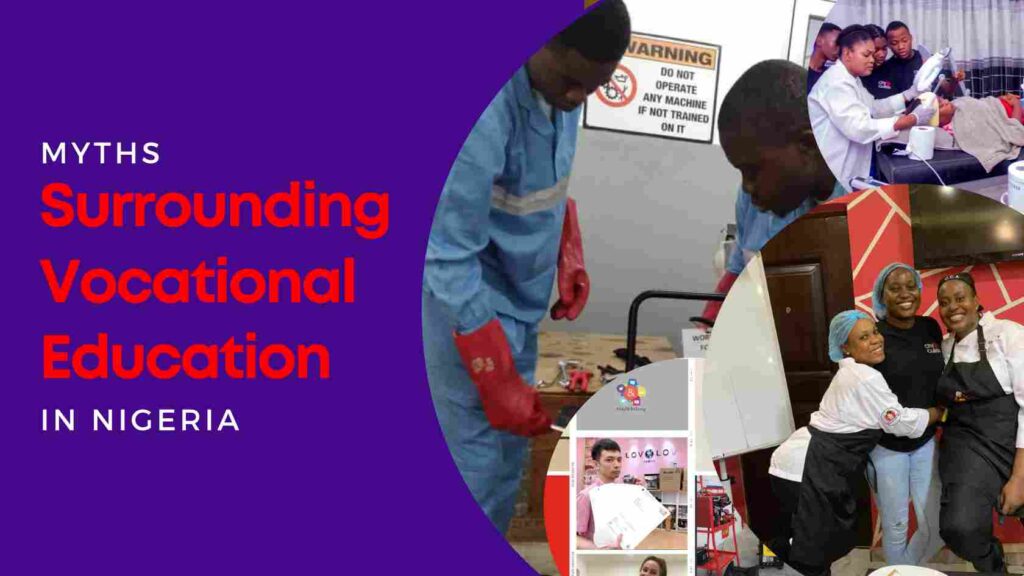
Unmasking Misunderstandings: Myths Surrounding Vocational Education in Nigeria Education is an undeniable cornerstone of progress, and vocational education stands as a transformative force within this realm. Yet, despite its immense value, vocational education often faces misconceptions and underestimation. In Nigeria, this pathway is frequently relegated to a lesser tier, deemed solely for those who struggle in traditional academic settings. However, this perception is not only inaccurate but also detrimental to the nation’s overall growth and development. This blog aims to dispel these prevailing myths surrounding vocational education in Nigeria, shedding light on its true essence and highlighting its pivotal role in shaping the country’s future. Embark on this journey as we unveil the transformative power of vocational education, empowering individuals and propelling Nigeria towards a brighter horizon. Myth 1: Vocational Education is Only for People Who Can’t Excel in Academics The idea that vocational education is solely for individuals who struggle in traditional academic settings is a common misconception. In reality, vocational education caters to a diverse range of people with varied strengths and interests. It’s not just an alternative for those who may not excel academically; rather, it’s a pathway for individuals who have a knack for practical skills and hands-on learning. Many successful professionals in different fields, including engineering, healthcare, culinary arts, and technology, have attained their skills through vocational education. They found this avenue more suitable for their learning style and career aspirations. This myth often overlooks the fact that vocational education offers valuable hands-on experiences, practical skills, and industry-specific knowledge. It’s a promising path for those who prefer practical learning environments or have a passion for specific trades. Stay tuned as we uncover more myths and reveal the truth behind vocational education in Nigeria. Myth 2: Vocational Courses Offer Limited Career Opportunities Contrary to popular belief, vocational courses provide extensive and diverse career opportunities across various industries. These courses are tailored to meet the demands of today’s job market – offering specialized skills that are highly sought after by employers worldwide. In the world today, there is a shortage of skilled workers. According to the World Economic Forum, by 2030, there will be a global shortage of 85.2 million skilled workers. This shortage is being driven by a number of factors, including the ageing population, the rise of automation, and the increasing demand for skilled workers in emerging economies. Vocational education isn’t restricted to a single career track. Graduates can explore numerous professions, from becoming certified electricians, plumbers, or welders to pursuing careers in Information Technology, healthcare, and hospitality. Moreover, vocational courses offer international recognition. Programs from reputable vocational institutes like City and Guilds of London are globally recognized. They equip students with skills that are valued in international job markets, opening doors to career opportunities abroad. Additionally, vocational education emphasizes practical, hands-on training, allowing students to gain real-world experience while learning. This experiential learning approach is highly appreciated by employers, giving vocational graduates a competitive edge. Through collaborations with international vocational institutes like City and Guilds of London, UK, students receive training aligned with global industry standards, enhancing their employability worldwide. Myth 3: Vocational Courses are Inferior to Academic Degrees This myth often stems from a misconception that vocational education holds less prestige compared to traditional academic paths. However, the reality is quite the opposite. Vocational courses hold equal value to academic degrees. They offer specialized training that directly addresses industry needs, providing skills that are immediately applicable in the workforce. While academic education focuses on theoretical knowledge, vocational education emphasizes practical skills, preparing students for real-world scenarios. This hands-on approach complements academic learning, ensuring a well-rounded education that equips individuals for success in their chosen fields. Vocational courses effectively bridge the gap between academic knowledge and the specific practical skills required by industries. By focusing on job-specific skills, vocational education ensures that graduates are job-ready and prepared to make immediate contributions to their chosen fields. Myth 4: Vocational Education Leads Only to Manual Labor Jobs Here is another contrary to popular belief, vocational education does not exclusively prepare individuals for blue-collar jobs. While it does offer training in technical and practical skills, it encompasses a wide array of career paths far beyond traditional trades: Vocational education opens doors to diverse professions beyond manual labour, encompassing fields such as healthcare, beauty therapy, technology, business management, and more. With advancements in technology, vocational courses are now integrating digital skills, preparing students for careers in IT, data analysis, website development, and other technology-driven fields. Vocational courses nurture entrepreneurship by providing practical skills required to start businesses, manage projects, and develop innovative solutions. Completing vocational courses does not restrict individuals from pursuing higher education. Many vocational qualifications are equivalent to traditional degrees, allowing progression to higher levels of education. The Bottom Line In today’s job market, vocational education is a vital pathway to success. It offers a wide range of career opportunities, provides specialised training that meets the demands of employers and imparts valuable skills that are highly relevant to the workplace. “We have been in existence for over 20 years and have trained over 20,000 students. Our alumni hold positions as managers, entrepreneurs, and professionals both locally and internationally.” Engr. Martin Adeleke, Managing Director of MOA Professional Institute Said. Vocational education is not just for those who struggle in traditional academic settings; it is a pathway for individuals who have a knack for practical skills and hands-on learning. It is a pathway that can lead to rewarding careers and a bright future.

Unmasking Misunderstandings: Myths Surrounding Vocational Education in Nigeria Read More »

Scroll to Top