

Home » Archives for Digital Growth

Author name: Digital Growth

MOA Professional Institute Expands to Abuja, Bringing World-Class Vocational Training to Northern Nigeria

MOA Professional Institute Expands to Abuja, Bringing World-Class Vocational Training to Northern Nigeria

MOA Professional Institute Expands to Abuja, Bringing World-Class Vocational Training to Northern Nigeria Abuja, Nigeria – 3rd of March, 2025 – MOA Professional Institute (MPI) marked a significant milestone with the grand opening of its Abuja Centre on March 3rd, 2025, at Suit A76/A77 EFAB Efab Mall Extension, Ahmadu Bello Way, Area 11, Garki, Abuja. With over 25 years of excellence in vocational education, MPI brings its renowned practical training and globally recognised certifications to the Federal Capital Territory, opening doors for aspiring professionals and artisans across Northern Nigeria. The unveiling ceremony witnessed the Director General of the National Board for Technology Incubation (NBTI), Kazeem Kolawole Raji, represented by NBTI Director of Commercial Kalu Awa Kalu, pledge a collaborative partnership with MPI. Raji emphasised the board’s commitment to certifying entrepreneurs and leveraging MPI’s expertise across NBTI’s national network of incubation clusters. “We will partner with you in the certification of most entrepreneurs,” Raji stated, recognising MPI’s mission to foster practical skills development. “We are going to partner with you, there are so many things we will do together.” Further solidifying MPI’s commitment to public-private collaboration, the Permanent Secretary of the Ministry of Special Duties and Intergovernmental Affairs, Dr. Onwusoro Ihemelandu, represented by Director of Human Resources Management Dr. Henrietta Okafor, announced plans to utilise MPI’s training programs for staff skills acquisition, particularly for pre-retirement training. “We will try to introduce this kind of skills acquisition programme for some officers who retire, too: pre-retirement training,” Dr. Ihemelandu explained, highlighting the importance of equipping individuals with practical skills for post-career success. Engr. Olajire Adeleke, Managing Director/CEO of MOA Professional Institute, articulated the institute’s vision to expand its reach across Northern Nigeria. He emphasized the strategic importance of the Abuja Centre as a gateway to providing vital vocational training to the region. “It is high time to use Abuja to reach out to other parts of the country,” Engr. Adeleke stated. “At the end of the programme, all the northern part of the country and beyond will get everything we are benefiting in the south-west.” He also highlighted the demand for City & Guilds of London certifications in the region, including within prominent industries like Peugeot in Kaduna and the oil and gas sector. The new Abuja Centre complements MPI’s growing network of training facilities, which include: HQ Lagos State Centre: 93 Idimu Road, Egbeda, Lagos State. Oyo State Centre: Leventis Building, Lebanon Street, Dugbe, Ibadan, Oyo State. Ogun State Centre: Express Junction, Sagamu, Ogun State. About MOA Professional Institute MOA Professional Institute has been at the forefront of vocational education for over 25 years, empowering individuals with practical skills and internationally recognised certifications. The institute’s mission is to bridge the skills gap by providing hands-on training in various fields, driving economic prosperity, and promoting self-employment. MPI partners with organizations for competence assurance, soft skill training, and employee development. Media Contact Taiwo Abimbola2347067113405| digitalgrowth@moaetscandg.org.ng  For copies of this release, high-resolution images, and video footage of the event, please contact our PR & Marketing Team

MOA Professional Institute Expands to Abuja, Bringing World-Class Vocational Training to Northern Nigeria Read More »

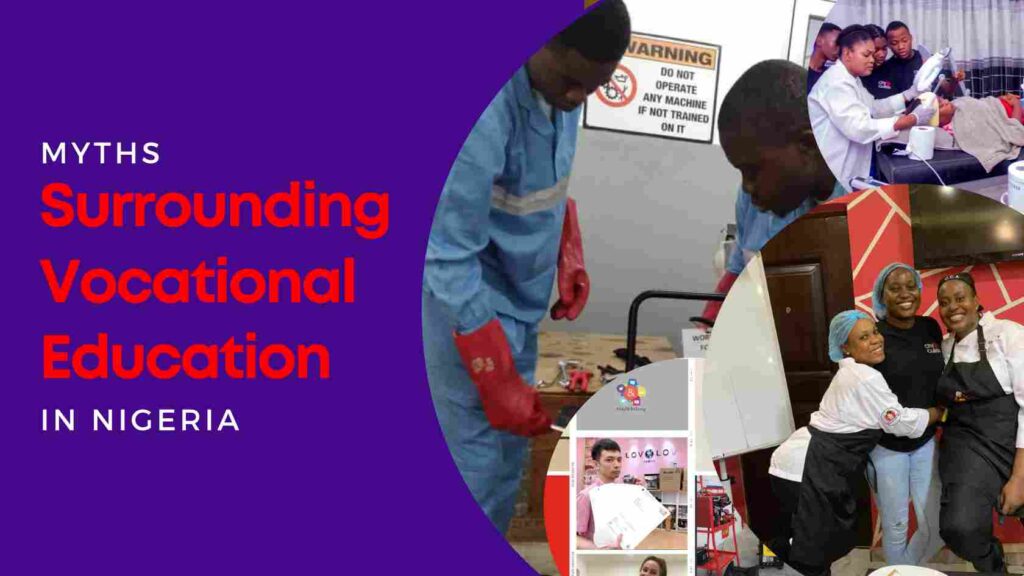
Unmasking Misunderstandings: Myths Surrounding Vocational Education in Nigeria

Unmasking Misunderstandings: Myths Surrounding Vocational Education in Nigeria

Unmasking Misunderstandings: Myths Surrounding Vocational Education in Nigeria Education is an undeniable cornerstone of progress, and vocational education stands as a transformative force within this realm. Yet, despite its immense value, vocational education often faces misconceptions and underestimation. In Nigeria, this pathway is frequently relegated to a lesser tier, deemed solely for those who struggle in traditional academic settings. However, this perception is not only inaccurate but also detrimental to the nation’s overall growth and development. This blog aims to dispel these prevailing myths surrounding vocational education in Nigeria, shedding light on its true essence and highlighting its pivotal role in shaping the country’s future. Embark on this journey as we unveil the transformative power of vocational education, empowering individuals and propelling Nigeria towards a brighter horizon. Myth 1: Vocational Education is Only for People Who Can’t Excel in Academics The idea that vocational education is solely for individuals who struggle in traditional academic settings is a common misconception. In reality, vocational education caters to a diverse range of people with varied strengths and interests. It’s not just an alternative for those who may not excel academically; rather, it’s a pathway for individuals who have a knack for practical skills and hands-on learning. Many successful professionals in different fields, including engineering, healthcare, culinary arts, and technology, have attained their skills through vocational education. They found this avenue more suitable for their learning style and career aspirations. This myth often overlooks the fact that vocational education offers valuable hands-on experiences, practical skills, and industry-specific knowledge. It’s a promising path for those who prefer practical learning environments or have a passion for specific trades. Stay tuned as we uncover more myths and reveal the truth behind vocational education in Nigeria. Myth 2: Vocational Courses Offer Limited Career Opportunities Contrary to popular belief, vocational courses provide extensive and diverse career opportunities across various industries. These courses are tailored to meet the demands of today’s job market – offering specialized skills that are highly sought after by employers worldwide. In the world today, there is a shortage of skilled workers. According to the World Economic Forum, by 2030, there will be a global shortage of 85.2 million skilled workers. This shortage is being driven by a number of factors, including the ageing population, the rise of automation, and the increasing demand for skilled workers in emerging economies. Vocational education isn’t restricted to a single career track. Graduates can explore numerous professions, from becoming certified electricians, plumbers, or welders to pursuing careers in Information Technology, healthcare, and hospitality. Moreover, vocational courses offer international recognition. Programs from reputable vocational institutes like City and Guilds of London are globally recognized. They equip students with skills that are valued in international job markets, opening doors to career opportunities abroad. Additionally, vocational education emphasizes practical, hands-on training, allowing students to gain real-world experience while learning. This experiential learning approach is highly appreciated by employers, giving vocational graduates a competitive edge. Through collaborations with international vocational institutes like City and Guilds of London, UK, students receive training aligned with global industry standards, enhancing their employability worldwide. Myth 3: Vocational Courses are Inferior to Academic Degrees This myth often stems from a misconception that vocational education holds less prestige compared to traditional academic paths. However, the reality is quite the opposite. Vocational courses hold equal value to academic degrees. They offer specialized training that directly addresses industry needs, providing skills that are immediately applicable in the workforce. While academic education focuses on theoretical knowledge, vocational education emphasizes practical skills, preparing students for real-world scenarios. This hands-on approach complements academic learning, ensuring a well-rounded education that equips individuals for success in their chosen fields. Vocational courses effectively bridge the gap between academic knowledge and the specific practical skills required by industries. By focusing on job-specific skills, vocational education ensures that graduates are job-ready and prepared to make immediate contributions to their chosen fields. Myth 4: Vocational Education Leads Only to Manual Labor Jobs Here is another contrary to popular belief, vocational education does not exclusively prepare individuals for blue-collar jobs. While it does offer training in technical and practical skills, it encompasses a wide array of career paths far beyond traditional trades: Vocational education opens doors to diverse professions beyond manual labour, encompassing fields such as healthcare, beauty therapy, technology, business management, and more. With advancements in technology, vocational courses are now integrating digital skills, preparing students for careers in IT, data analysis, website development, and other technology-driven fields. Vocational courses nurture entrepreneurship by providing practical skills required to start businesses, manage projects, and develop innovative solutions. Completing vocational courses does not restrict individuals from pursuing higher education. Many vocational qualifications are equivalent to traditional degrees, allowing progression to higher levels of education. The Bottom Line In today’s job market, vocational education is a vital pathway to success. It offers a wide range of career opportunities, provides specialised training that meets the demands of employers and imparts valuable skills that are highly relevant to the workplace. “We have been in existence for over 20 years and have trained over 20,000 students. Our alumni hold positions as managers, entrepreneurs, and professionals both locally and internationally.” Engr. Martin Adeleke, Managing Director of MOA Professional Institute Said. Vocational education is not just for those who struggle in traditional academic settings; it is a pathway for individuals who have a knack for practical skills and hands-on learning. It is a pathway that can lead to rewarding careers and a bright future.

Unmasking Misunderstandings: Myths Surrounding Vocational Education in Nigeria Read More »

Scroll to Top